
Which non-GamStop sites skip verification, and what is the catch?
 Available in GB
By , iGaming Regulation and Self-Exclusion Analyst — — 8 min read
No-verification casinos are one of the most heavily searched corners of the non-GamStop market, and one of the most misunderstood. The promise sounds simple: deposit, play and withdraw without ever handing over an ID. The reality is more conditional. A handful of sites genuinely run with almost no identity checks, but most of what is marketed as no-KYC is really deferred-KYC, where the verification you skipped at sign-up reappears at the worst possible moment — when you try to take your winnings out. This page explains the difference, where the catch lives, and why the absence of checks is a risk marker rather than a feature.
What is the difference between no-KYC and low-KYC?
KYC stands for know your customer, the identity and age checks that gambling and financial businesses run to confirm who they are dealing with. A genuinely no-KYC site asks for nothing beyond an email and a deposit, and there are a few that operate this way, usually crypto-only and usually on the cheapest licences. Far more common is the low-KYC or deferred-KYC model, where sign-up is frictionless but verification is simply postponed. You can deposit and play within minutes, which is what the marketing emphasises, but the checks have not been removed — they have been moved.
That distinction matters because the marketing collapses the two into a single promise. A player reads no verification and assumes their identity will never be requested. What they have usually signed up to is a site that will request it later, on its own timetable, and often with more scrutiny than a UK casino would have applied up front. For the wider context of which operators run this way and why, the non-GamStop operator overview sets out the licensing picture behind these sites.
It is also worth asking why a site would design things this way at all. Removing checks at the door lowers the single biggest barrier to a new account, which lifts conversion and lets a brand advertise instant play. Postponing the checks rather than abandoning them lets the operator still meet whatever anti-money-laundering obligations its licence imposes, and gives it a lever to pull if it would rather not pay out. Seen from the operator’s side, deferred verification is not a generous gesture; it is a commercial design choice that happens to shift the inconvenience squarely onto the player.
Why does verification reappear when you try to cash out?
The catch is almost always at the withdrawal stage. While you are depositing and losing, a low-KYC site has little incentive to ask questions. The moment you request a payout, especially a large one, the same site will frequently trigger enhanced KYC and a source-of-funds request, asking for identity documents, proof of address and sometimes evidence of where your money came from. This is a documented pattern across the offshore segment, and it is the single most common reason players report frozen balances and multi-month waits.
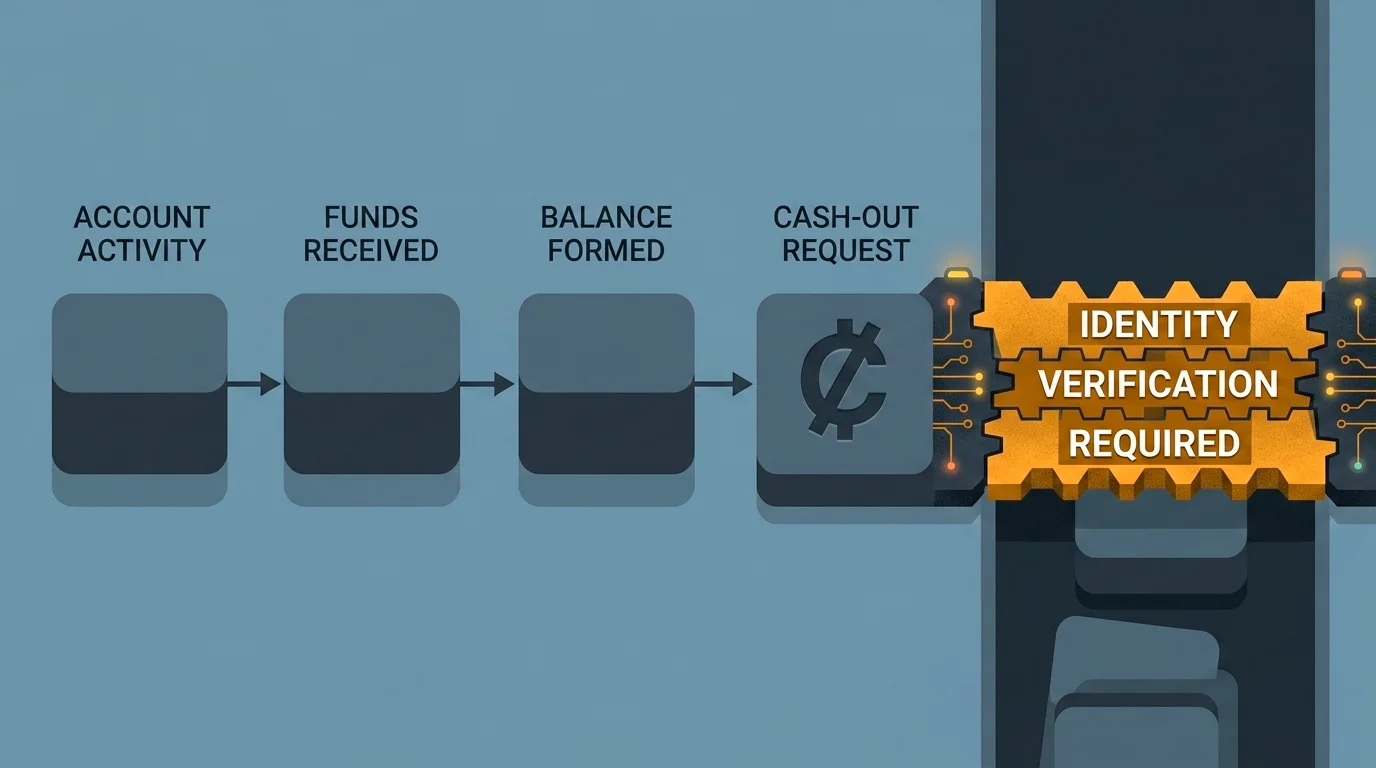
There are two ways this plays out, and neither is comfortable. In the better case, you supply the documents, the site verifies you and the withdrawal eventually clears after a delay. In the worse case, the terms allow the operator to void winnings if any detail does not match, or to sit on the request indefinitely while it asks for more paperwork. Because the site is offshore, you have no UK-approved dispute body to escalate to, which is precisely the protection a player gives up by going outside the UK Gambling Commission framework. You can read what that lost recourse looks like in practice on the page covering the safety risks of skipping KYC.

The pattern is consistent enough that it is worth naming as the central risk of these sites. A balance that felt like winnings on screen is not really yours until it has cleared your own account, and a low-verification operator keeps the power to decide whether and when that happens. The friction you avoided at sign-up does not disappear; it simply waits until the stakes are highest.
What a source-of-funds request typically asks for
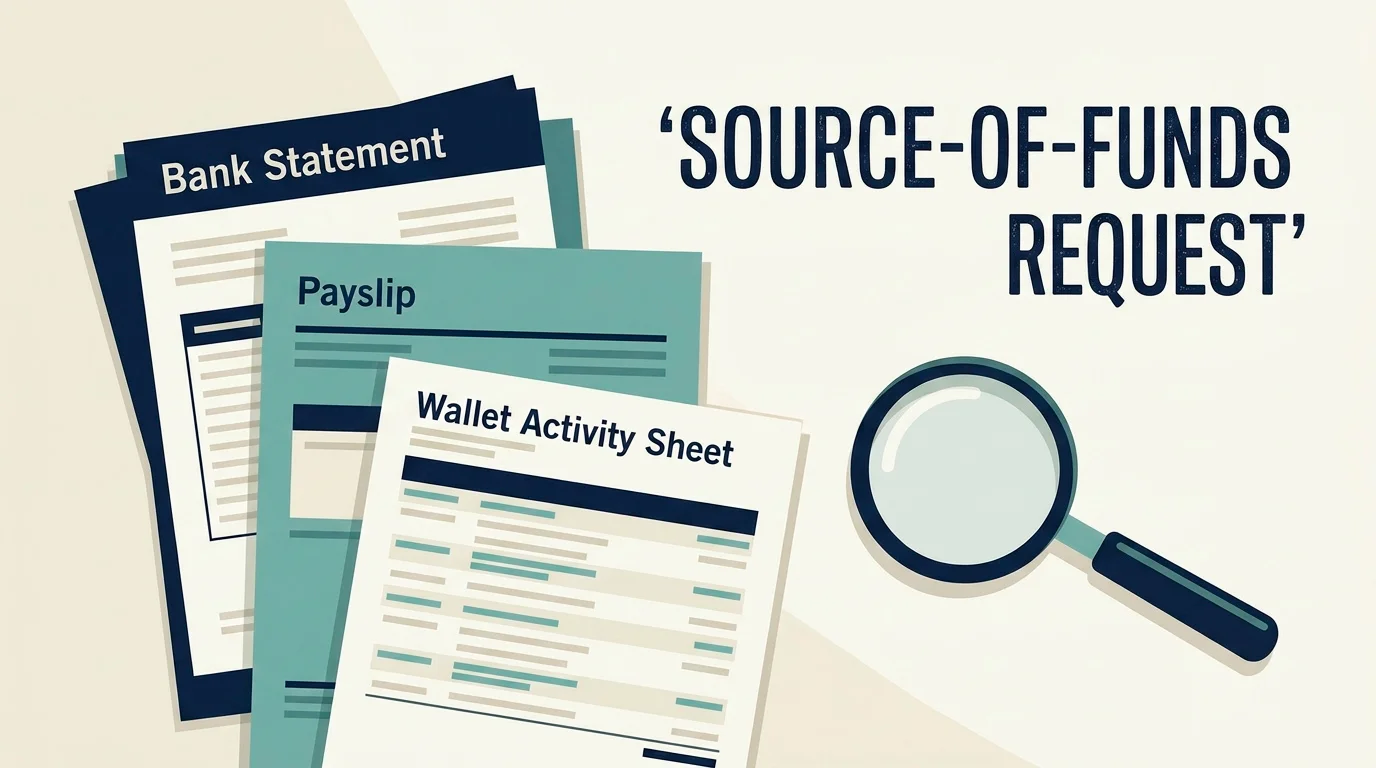
Source-of-funds and source-of-wealth checks usually request bank statements, payslips, screenshots of crypto wallet activity or other evidence that the money you are gambling with is legitimately yours. On a UK-licensed site these checks are part of a regulated anti-money-laundering and affordability framework. On an offshore site they are applied at the operator’s discretion, often only when you try to withdraw, which is why a player who never expected to be verified can find a large balance locked behind a sudden documentation demand.
How does crypto make low-verification sign-ups possible?
There is a direct link between the low-KYC model and cryptocurrency. Mainstream fiat payment processors increasingly decline gambling transactions to unlicensed operators, so offshore sites that want to stay open lean on crypto, which does not require a bank to approve the transfer or a card network to authorise it. That is why so many no-verification sites are crypto-first: the payment rail itself sidesteps the institutions that would otherwise insist on identity checks.
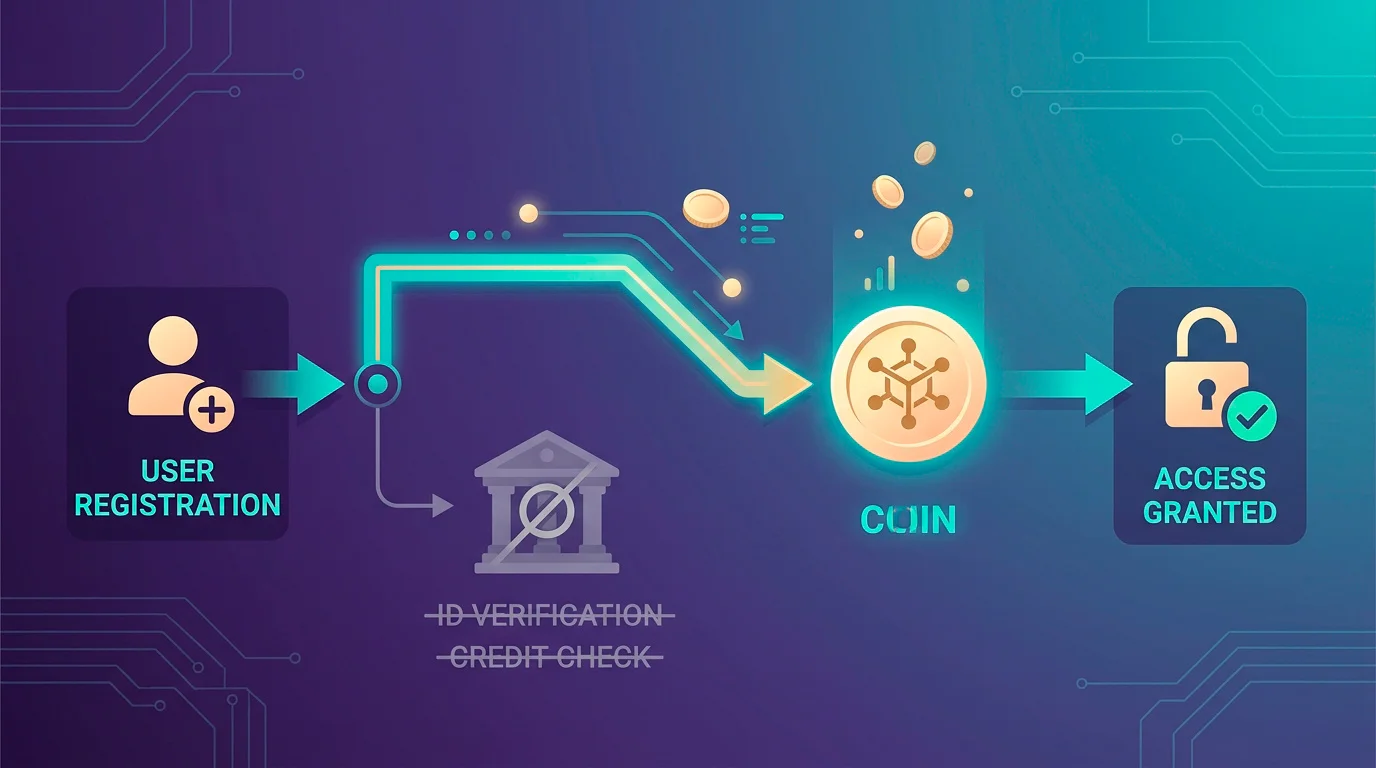
For a player this looks like convenience, and on the way in it is. The complication is that crypto removes the very safeguards that would normally protect you if something goes wrong. There are no chargebacks, transfers are irreversible, and there is no payment provider to intervene if a withdrawal stalls. The practical mechanics of all this — which coins are common, typical timings and why crypto enables fast payouts at these sites — are covered in detail in the guide to crypto and low-KYC payments, which is worth reading alongside this page.
Why is missing verification a risk rather than a perk?
It is tempting to read light verification as a sign that a site trusts you, or simply respects your time. The more accurate reading is that it tells you what the operator is not doing. UK-licensed casinos run identity and age checks because they are required to, and since 28 February 2025 they have also run light financial-vulnerability checks as part of the affordability framework supervised by the regulator. An offshore site that skips all of this is not offering you a better experience; it is operating without the anti-money-laundering posture and the player-protection duties that those checks represent.
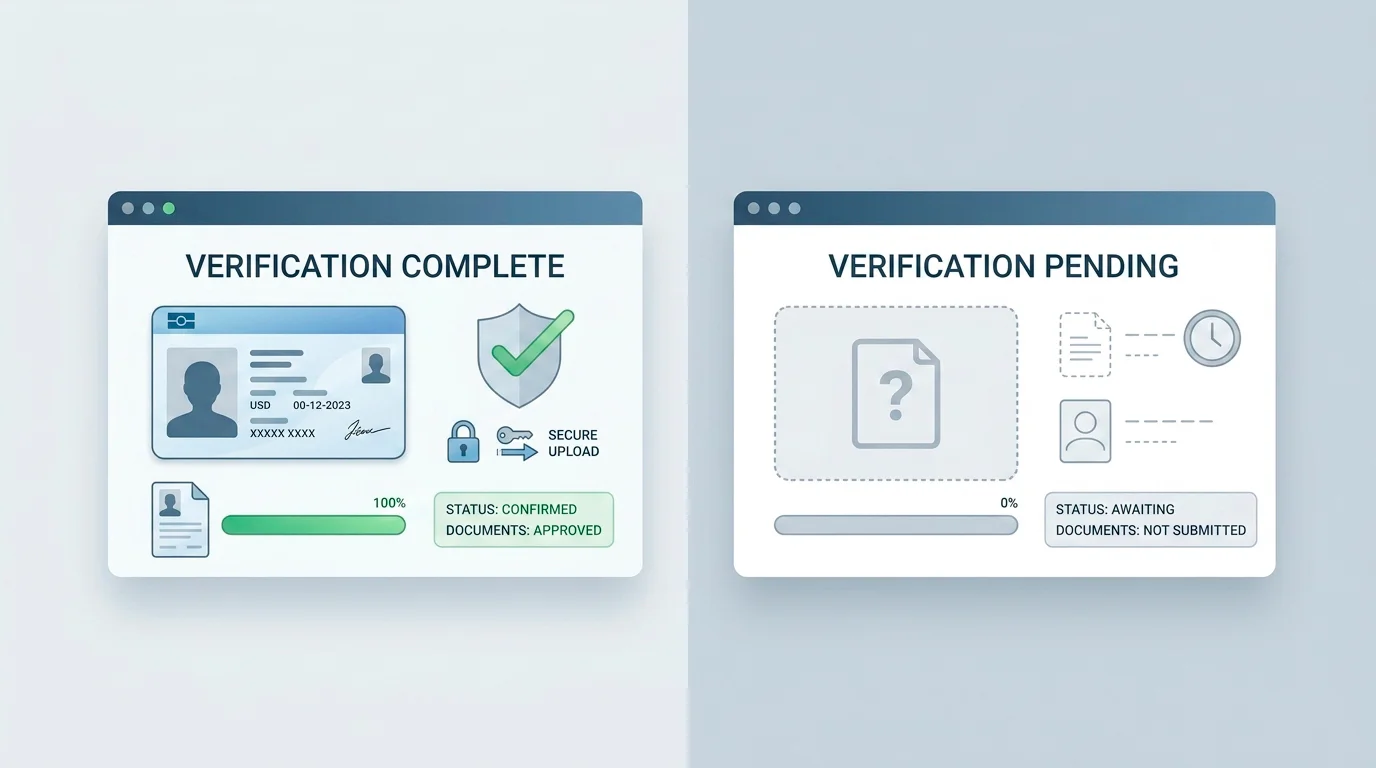
The absence of checks also raises your exposure to rogue operators. A site that does not verify anyone is, by design, harder to hold accountable, easier for bad actors to use, and less likely to have the controls that protect a legitimate player from one who is laundering money or gambling underage. It is worth remembering that age and identity verification are not only about the operator; they are part of how the wider system keeps minors and self-excluded people away from gambling at all. A site that quietly waives them is not doing you a favour so much as switching off a safeguard that exists for everyone. The regulator publishes its expectations on identity and affordability checks on the UK Gambling Commission website, and the contrast with offshore practice is stark. Knowing how to confirm whether a site is supervised at all is the natural next step, which is why this cluster points you towards the walkthrough on how to verify an offshore licence before you ever upload a document.
If you take one thing from this page, let it be this: skipping verification does not make your money safer or your withdrawal faster in the end. It moves the friction to the point where it hurts most and removes the protections that would normally help you when it does. The convenience is real, but it is front-loaded, and the cost arrives later. For the full context of the market these sites sit in, the main guide to non-GamStop casinos ties the licensing, payments and safety threads together.
If gambling is causing you harm
This page is informational and does not encourage anyone to bypass a self-exclusion. If you registered with GamStop because gambling was becoming a problem, a low-verification offshore site is not a safe route back. Free, confidential support is available across the UK at any hour. The National Gambling Helpline, run by GamCare, is on 0808 8020 133, free and open 24 hours a day, every day. You can also reach GamCare directly for advice, support and the TalkBanStop programme of blocking tools and self-exclusion.
About the author
Owen Radcliffe has spent over twelve years tracking the UK online gambling market, with a particular focus on licensing, self-exclusion frameworks and the offshore operators that sit outside the GamStop scheme. He writes plain-language analysis aimed at helping readers understand the regulatory and financial trade-offs before they act, drawing on a professional background in compliance research. More about Owen Radcliffe.
The full picture is in our guide to casinos not on GamStop.
How the money moves at these sites: the payment methods.