How do you protect yourself when a site has no UKGC cover?
 Available in GB
By Owen Radcliffe, iGaming Regulation and Self-Exclusion Analyst — — About 10 minutes to read
The blunt truth about a casino with no UK Gambling Commission cover is that everything the UK system does to protect you simply is not there. Not weakened, not reduced, but absent. There is no mandatory affordability check, no enforced deposit or stake limit, no guaranteed self-exclusion, no requirement to keep your money separate from the company’s own, and no access to the UK’s dispute resolution system. This page is the unglamorous part of the topic that most listicles skip, because it is the part that decides whether you actually get your money back when something goes wrong.
Table of Contents
What exactly disappears the moment you step outside the UKGC?
It helps to see the protections as a single package rather than a checklist, because losing one tends to mean losing all of them at once. A UK-licensed operator must run affordability and financial-risk checks, must offer deposit and stake limits that actually bind, must integrate with the national self-exclusion scheme, must keep customer funds segregated to a defined standard, and must belong to a UK-approved Alternative Dispute Resolution provider. An offshore site does none of this by default, and the foreign regulator that issued its licence has no obligation to enforce British consumer standards on your behalf. The regulator that sets all of these conditions, the UK Gambling Commission, has no jurisdiction over a company it never licensed, which is the whole structural problem in one sentence.
This is why “are these sites safe” is really a question about what happens in the bad moments, not the good ones. When you are winning and the site is paying, everything feels fine. The protections only reveal their value when there is a dispute, an insolvency or a withheld withdrawal, and that is exactly when offshore players discover they have nothing to fall back on. The legal background to why these operators sit outside the system at all is covered in the page on whether these casinos are legal, and it is worth reading alongside this one.
Is your money actually safe if the operator goes under?
Fund segregation is the protection people understand least and need most. Under UK rules, operators must hold customer balances in a way that separates them from the company’s working capital, with a disclosed level of protection so you know roughly what would happen to your money if the business failed. Offshore, that standard generally does not apply. Your balance may be commingled with the operator’s own funds, which means that if the company becomes insolvent, your money can simply be part of the wreckage with no priority claim and no compensation scheme behind it. There is no UK equivalent of a deposit guarantee for gambling balances at an unlicensed site, and the foreign licensor is unlikely to make you whole.
That changes how you should think about leaving money in an account. On a UK site, a balance sitting in your account is uncomfortable but recoverable. On an offshore site, every pound left in the account is exposed, both to insolvency and to the more mundane risk of an account being frozen or closed. The sensible posture is to treat any offshore balance as money you could lose entirely, which is a very different mindset from the one most casino marketing encourages. If you want to understand how the payment side compounds this, particularly with irreversible crypto transfers, the main guide to casinos not on GamStop connects the funding and safety pictures.

What goes wrong most often, in practice?
Individual reviews are anecdotal and should be read with caution, but the pattern across thousands of them is consistent enough to take seriously. The recurring complaints are not random; they cluster around the cash-out moment, which is exactly where an operator’s incentives and the player’s interests collide. Below are the patterns I see most often, framed as what to expect rather than what is guaranteed.
Delayed or non-payment of withdrawals
Deposits are instant; withdrawals are where the friction lives. Multi-month waits, repeated requests for the same documents, and withdrawals that are quietly cancelled and credited back to the balance are all common. Without a UK dispute body, your leverage to force payment is limited.
Enhanced KYC and source-of-funds demands at cash-out
Verification that was waved through at sign-up suddenly appears when you try to withdraw, with demands for identity documents and proof of where your money came from. This deferred-KYC pattern is closely tied to the low-verification segment, and it is examined in more depth in the cluster on these operators.
Winnings confiscated for bonus-term breaches
Maximum-bet rules and other bonus conditions are frequently buried in lengthy terms, and a single breach, sometimes an unwitting one, can void an entire balance of winnings. The terms are written to be enforceable against you, not for you.
Abrupt account closures
Accounts can be closed with little explanation, balances held pending review, and correspondence slowing to a crawl. With no UK regulator to escalate to, the realistic recourse is a slow foreign complaints process that may go nowhere.
The throughline is that recourse against a withholding operator runs only through whatever complaints route the foreign licensor offers, which is typically slow, opaque and weak compared with the UK-approved ADR you would have on a licensed site. Verifying the licence before you deposit, using the steps in the guide to checking an offshore licence, at least tells you which regulator you would be complaining to, even if that is cold comfort.

What about the scam layer around all this?
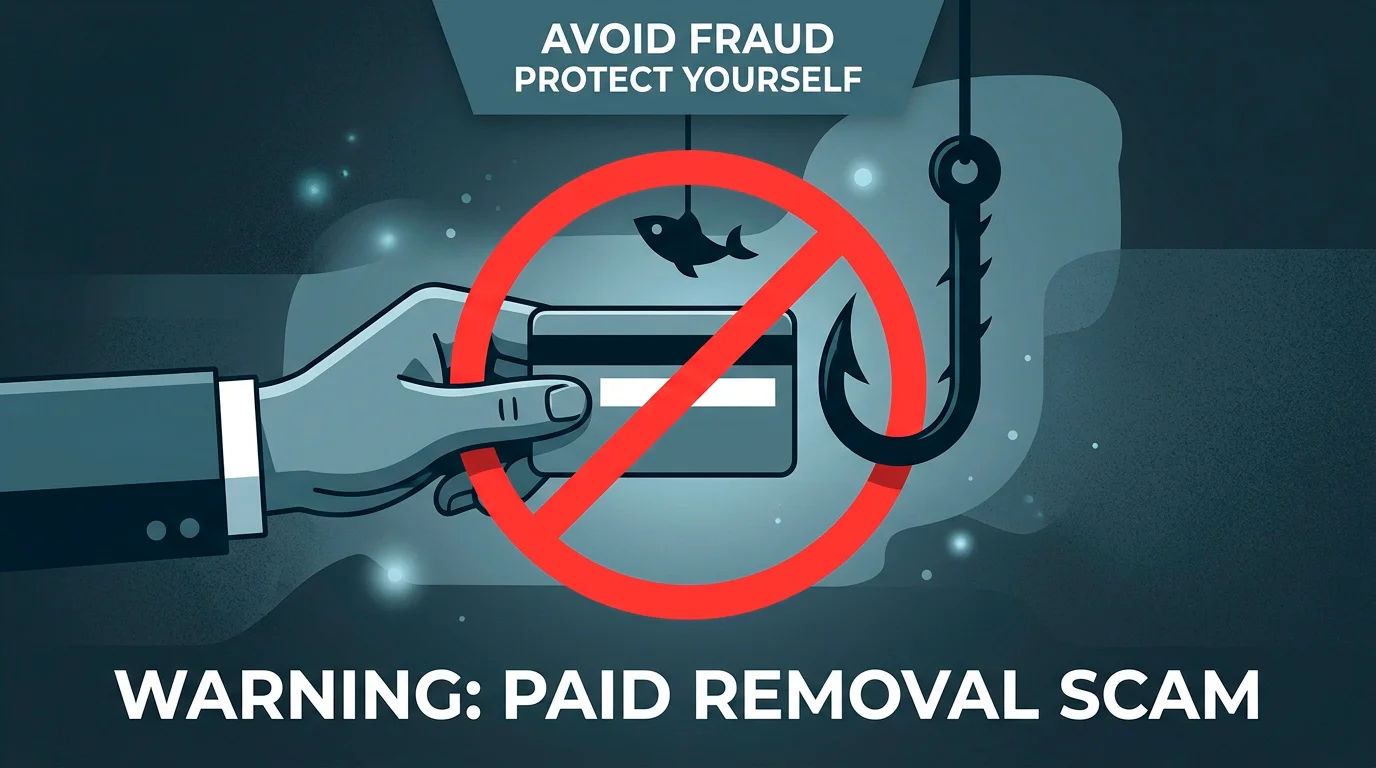
There is a specific predatory layer worth naming plainly, because it targets the most vulnerable readers. Paid services that promise to “remove” or “cancel” GamStop are scams. The national scheme authorises no such service, takes payment from no one to lift an exclusion, and cannot be circumvented by a third party for a fee. Anyone charging money to get you off GamStop is taking advantage of a person in a difficult moment, and the legitimate process, when a period has genuinely ended, is free and runs directly through the scheme itself. If that is what brought you here, the responsible route is set out in the page on ending self-exclusion the proper way, which treats it as support rather than a sales funnel.
One rule that never has an exception
No legitimate organisation will ever ask you to pay to be removed from GamStop. If money is being requested to lift a self-exclusion, it is a scam, full stop.
What can you actually do to reduce the risk?
If you are going to read about these sites at all, it is better to do it with a clear method than to drift in unprotected. None of the steps below makes an offshore site safe, but together they cut down the worst exposures and force the decisions to the surface before your money is in. Work through them in order, and treat any failure as a reason to stop rather than a hurdle to push past.
- Verify the licence number independently on the regulator’s own portal, not the casino’s footer seal.
- Confirm the licensed company name matches the operator you are actually using.
- Read the withdrawal and bonus terms in full, especially maximum-bet rules and source-of-funds clauses, before depositing a penny.
- Make a small test withdrawal early, before you build a large balance, to see how the cash-out process really behaves.
- Never leave more in the account than you are prepared to lose entirely.
- Set your own limits and a bank gambling block, since the site will not set them for you.
- Keep records of every transaction and message, in case you ever need to pursue a foreign complaint.
Even with all of that, the honest summary is that you are managing risk you cannot eliminate. The protection you are recreating by hand is the protection a UK licence would have given you automatically, which is the trade-off laid out in full in the comparison of what UKGC protection you lose.

Help is here, and it is free
If reading this has touched something closer to home, please know that support is available right now and costs nothing. The National Gambling Helpline, run by GamCare, is open 24 hours a day, every day, on 0808 8020 133, with WhatsApp and live chat options too. You can find prevention and treatment support through BeGambleAware, set a free self-exclusion through GamStop, and the TalkBanStop programme combines support, blocking software and self-exclusion in one place. Asking for help is the strongest move you can make, and there is no wrong time to do it.
About the author
Owen Radcliffe has spent over twelve years tracking the UK online gambling market, with a particular focus on licensing, self-exclusion frameworks and the offshore operators that sit outside the GamStop scheme. His work centres on explaining how UK Gambling Commission rules, payment restrictions and player-protection tools actually affect people in practice, rather than in theory. He holds a professional background in compliance research and regularly reviews published regulator guidance and consultation outcomes to keep his explanations current. Read more on his author profile.
The full picture is in our guide to casinos not on GamStop.
Step one of due diligence is checking the licence.