
Most Trustworthy Online Casinos in the UK: How to Check
A UKGC licence is the starting point for assessing a casino, but its register record, terms, limits and withdrawal practices also matter.
 Available in GB
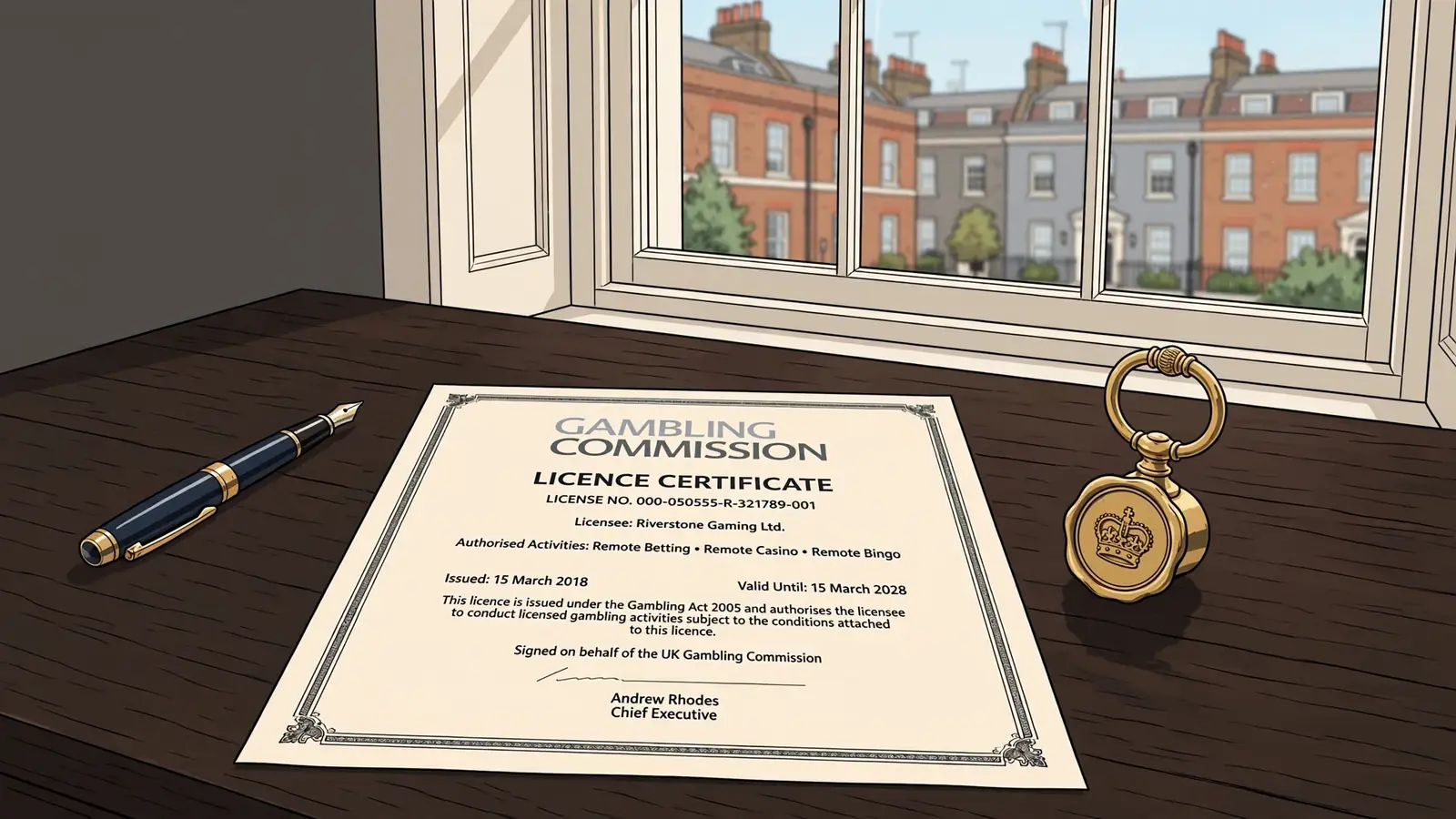
Table of Contents
- What UK licensing tells you—and what it doesn’t
- Trust is more than a licence badge
- The register can tell a harder story
- Real-money play starts with checks and limits
- Bonuses: read the maths before you opt in
- Withdrawals are part of the trust test
- Recommended online casinos
- Non-GAMSTOP claims need a reality check
- Crypto claims don’t replace the licence check
What UK licensing tells you—and what it doesn’t
When you ask what makes an online casino trustworthy, the first check is not its welcome banner, game library or payment logo. It is whether the operator holds the right UKGC Licence for the market it is serving.
For customers in England, Scotland and Wales, remote gambling is regulated by the UK Gambling Commission. A business that offers online casino facilities to people in Great Britain must have the relevant licence, even when the company itself is based somewhere else. Location does not provide a workaround. If the service is aimed at British customers, the British licensing requirement applies.
That gives you a clear legal starting point. A casino serving Great Britain without the required UKGC Licence is not operating within the local regulatory framework. I used to treat a polished site and familiar-looking terms as reassuring enough. That was backwards. The licence question comes first.
What the licence covers
The Gambling Commission’s role is to regulate remote gambling offered to consumers in Great Britain. In practical terms, that means the licensing framework applies to online gambling services available to customers in England, Scotland and Wales.
The licence is not a decorative approval placed beside a casino logo. It is the legal permission required for the operator to offer remote gambling to this market. A site’s claims about being “trusted” or “established” cannot replace it.
There is also an important distinction between the regulator and the whole of the United Kingdom. The Gambling Act 2005 governs gambling in England, Wales and Scotland, while Northern Ireland is outside that Act’s scope. The UK Gambling Commission does not have the same remit for remote-gambling provision in Northern Ireland.
So a statement about Great Britain should not quietly be presented as a statement about every part of the UK. They are related markets, but the regulatory boundaries are not identical. Northern Ireland has its own legal framework, including the Betting, Gaming, Lotteries and Amusements (Northern Ireland) Order 1985.
Casino Sites: UK Licensing and Registration Guide
What the licence does not tell you
A UKGC Licence establishes the legal baseline for a casino serving Great Britain. It does not, by itself, answer every question a careful player may have about the operator’s conduct, terms or day-to-day service.
That is why I would not stop at a badge in the footer. The badge may be genuine, outdated, or attached to a different company from the one you think you are dealing with. A licensing claim needs to be checked against the regulator’s public information rather than accepted because the site looks professional.
Nor does licensing turn gambling into a safe way to make money. It does not remove the possibility of losses, make every promotion worthwhile or guarantee that every interaction will be smooth. It tells you that the operator is subject to the Great Britain licensing system. Nothing more—and nothing less.
For anyone comparing the most trustworthy online casino options, that distinction matters. Licensing is the floor, not a complete verdict.
Trust is more than a licence badge
A UKGC Licence is where I start, not where I finish. The badge tells me that an operator sits within the relevant British regulatory framework. It does not tell me that every advert is clear, every promotion is easy to understand, or every customer-service exchange will be painless. Trust has to be checked against the business and the website actually in front of me.
That distinction matters because casino branding can be slippery. A familiar name may appear in a banner, a review, a mobile app or a redirected domain, while the legal operator sits somewhere less visible. I have made the lazy assumption before: recognised logo, secure-looking page, job done. That is not a check. It is just a feeling wearing a tie.
Start with the operator, not the logo
The public register is useful because it separates the trading face from the licensed business behind it. When I assess a casino, I look for:
- the operator’s legal name;
- its UKGC account number;
- the licence status;
- the domains connected with that operator;
- any indication that the site is a white-label domain rather than a direct brand website.
The point is not to collect impressive-looking details. It is to match them. The operator named in the casino’s footer should make sense beside the operator shown in the register. The domain you are considering should also appear as the relevant UK-facing website, rather than being an unrelated address that happens to borrow the same branding.
That match is more meaningful than a licence image pasted into a page. A badge can be copied. A register entry gives you something concrete to compare.
Check the exact website
A trustworthy casino site should not make you guess which domain is licensed. I copy the address from the browser and compare it with the domain information held by the UK Gambling Commission. I do not rely on the first result in a review, the name in a social-media post or a link that redirects several times.
This is especially important where a brand operates across different markets. A website ending in a familiar country-code domain may not be the same service as a similarly named international page. The relevant question is whether the precise UK-facing domain is connected to the licensed operator for customers in Great Britain.
The register provides a useful illustration. It records leovegas.co.uk as the UK-facing domain associated with operator account 39198, while the Commission identifies the operator holding that account as LeoVegas Gaming PLC. Those two pieces belong together: domain and legal operator. If I encountered a different address using the same brand, I would not assume the connection without checking it.
That is the level of detail I want before creating an account. Not because a domain match makes the casino perfect, but because a mismatch gives me a reason to stop.
No Account Casino UK: What the Label Really Means
White-label sites need closer attention
A white-label arrangement is not automatically a sign that a casino is unsafe. It does mean that the consumer-facing brand and the licensed operator may not have the same name. That can make the comparison harder, so I slow down rather than treating the brand as self-explanatory.
I check the site’s terms, privacy information and licence details together. The legal operator should be identifiable, and the information should not conflict from one page to another. If the footer names one company, the terms mention another and the register points somewhere else, I would treat that as unresolved rather than filling the gap with optimism.
This is one reason I prefer the register to a marketing page. The casino may describe itself as “trusted”, “premium” or “official”. Those are claims made by the business. The register is a separate reference point for checking who is authorised and which domain is connected to that authorisation.
Still, even a clean match has limits. It confirms the regulatory connection; it does not certify the quality of every part of the customer experience.
What the licence can—and cannot—prove
A current UKGC Licence is a baseline for a casino serving customers in England, Scotland and Wales. Without the appropriate local licence, I would not describe a site as a trustworthy UK casino. With one, I know the operator is inside the framework rather than presenting an offshore authorisation as though it were British approval.
But “licensed” is not a synonym for “flawless”. Regulators can take action against licensed businesses. Rules can be breached, policies can be applied badly, and a company can still leave customers frustrated while remaining listed. The licence tells me where accountability sits; it does not remove the need to read the terms or keep my own records.
I therefore separate two judgements:
- Is the casino legally connected to a UK-licensed operator and domain?
- Does the casino’s actual conduct and information give me enough confidence to use it?
The first is a register check. The second requires attention to the site itself. Mixing them creates the usual trap: a reader sees a licence number and assumes every promise around it has been independently approved.
Read the site as a set of claims
When I see “trusted”, I ask what the word is doing there. Sometimes it simply means the page displays a licence reference. Sometimes it is wrapped around claims about fast service, easy withdrawals or generous treatment. Those are separate matters and should be tested separately.
I look for plain answers to practical questions:
- Who is the legal operator?
- Which exact domain am I using?
- Does the domain correspond with the UKGC register?
- Are the terms available before registration?
- Are important restrictions hidden in a separate promotion page?
- Is customer support identifiable and reachable?
- Does the site explain its complaints route?
- Are responsible-gambling controls visible instead of buried?
This is not about demanding a perfect website. Every operator can have a clumsy page or an awkward help centre. I am looking for whether the important information is present, consistent and understandable. A casino that makes the legal identity difficult to establish has already created unnecessary doubt.
Treat reviews as leads, not proof
Independent reviews can help me find questions to ask, but I do not use them as a substitute for the register. A review may describe a brand, compare offers or repeat what an operator says about itself. It may also become outdated when ownership, domains or terms change.
I check the primary information myself. That habit has saved me from accepting a confident paragraph as evidence. A review saying that a site is among the most trustworthy online casinos is an opinion; the operator and domain entries are the part I can verify against the regulator’s information.
The same applies to user comments. They can reveal recurring complaints or useful details about the customer journey, but one story does not establish a general rule. I note the warning, then look for the contractual wording and the licensed operator behind the website.
Trust is also about clarity
A casino can pass the identity check and still communicate poorly. I pay attention to whether the site explains key account decisions in ordinary language. If an important condition appears only after I have deposited, that damages confidence even if the operator is licensed.
A trustworthy casino site should not make you guess which domain is licensed. Always compare the domain in your browser with the information held by the UK Gambling Commission.
I also want the site to make responsible gambling controls easy to find. A trustworthy operator should not treat them as an embarrassing footnote. Account-level limits, self-exclusion information and support options belong in the ordinary customer journey, not in a page I have to hunt for after something has gone wrong.
I am not looking for a casino that promises never to make a mistake. That promise would make me suspicious. I want a business that identifies itself clearly, keeps its UK-facing domain information consistent, explains its rules and provides a route for complaints when the experience goes off track.
A practical register check
My own check is deliberately boring:
- I write down the exact casino domain, including its ending.
- I find the operator’s legal name in the site’s terms or footer.
- I search the UKGC public register for that operator.
- I compare the account details and listed domain with the website I plan to use.
- I return to the casino and see whether its licence information matches what the register shows.
- I save the relevant terms and the date of my check.
That final step is easy to overlook. Websites change. A page that looked clear when I joined may later be redesigned, redirected or replaced. Keeping a copy of the terms and the domain check gives me a record of what I relied on, rather than leaving everything to memory.
For a concrete example, the register connection between LeoVegas Gaming PLC, account 39198, and leovegas.co.uk is the kind of relationship I want to see: a named operator, a specific account and a defined UK-facing domain. I would still read the site’s own terms and policies, but I would not be trying to connect anonymous branding to an unidentified licence.
The badge is the beginning
When people ask which UK online casinos are trustworthy, I understand why they want a short list. I have wanted one myself. The problem is that trust is not a permanent sticker attached to a brand. It depends on the operator, the precise domain, the information presented and the way the business behaves over time.
My minimum standard is therefore simple: current UKGC Licence, identifiable operator, matching UK-facing domain and clear terms. Anything less leaves too much to guesswork. But that standard is only the entry gate. It cannot promise perfect conduct, instant help or a friction-free account.
A licence gets the conversation started. The register tells me who I am dealing with. The rest is whether the casino’s claims survive contact with the details. That is the real test.
The register can tell a harder story
A UKGC Licence is a starting point, not a character reference. I used to treat the badge as the answer: if the logo was visible, I assumed the rest was probably in order. That is too easy. Enforcement history can show how an operator handled people when the rules mattered.
Merkur Casino Online UK: Games, Casinos and Checks
Grace Media is a useful example. The UK Gambling Commission’s public register connects the domain 333casino.com with Grace Media (Gibraltar) Limited, under account 57869, and identifies it as a White Label domain. That detail matters because the brand a player sees may not be the same legal entity appearing in the regulatory record.
A specialist review links those details to the same operator, but I would not treat that kind of review as the final word. The register is the place to check the relationship, account number and licence status for yourself. A polished brand page can make the ownership structure look simpler than it is.
The harder part is the enforcement record. On 26 June 2025, the Commission issued Grace Media with a £60,000 financial penalty. The case involved failures connected with self-exclusion and consent for direct electronic marketing. Those are not decorative compliance points. Someone who has excluded themselves should not be pulled back towards gambling, and promotional messages should not be sent without the required permission.
That is the bit a “trustworthy” label cannot prove. A casino can display a licence badge and still have a record that deserves closer attention. I am not saying one enforcement action answers every question about a brand; I am saying it changes the question from “Is it licensed?” to “How has the operator behaved under scrutiny?”
When reading trustworthy casino reviews, I would therefore separate three things:
- the brand shown to customers;
- the legal operator and account recorded by the Commission;
- any published enforcement action involving that operator.
This is not about hunting for a perfect company. Regulators enforce rules because licensed businesses can get things wrong. The useful check is whether the operator’s history raises a specific concern, especially around self-exclusion or marketing permission.
A licence badge tells you the operator sits inside the regulatory system. The register and enforcement record tell you more about what happened there. That difference is small on a homepage and significant when you are deciding whether to open an account.
Real-money play starts with checks and limits
A trustworthy real-money online casino does not let you rush straight from registration to a funded account. In Britain, age and identity checks come before depositing or playing. That can feel like friction when you are eager to get started, but it is also the point of the process: the operator must establish who you are and confirm that you are old enough to gamble.
I once treated a verification request as an annoyance and uploaded the first document I found on my phone. It was blurry, and the casino came back asking for it again. My own shortcut added delay. Better to prepare a clear document before you deposit.
What the first checks cover
Age verification is not something an operator can leave until later. You must be verified as old enough before funds can be deposited into a gambling account. Identity or payment-ownership questions may also follow, particularly when the operator needs to confirm that the account belongs to you and that the payment method is being used legitimately.
Identity verification commonly means sending:
- a photo of your passport or driving licence;
- a recent utility bill as proof of address.
The exact upload screen varies, but the basic request is familiar. The identification image needs to be readable, and the address document needs to show your details clearly. If the casino cannot match the information on the documents with the registration details, the account may remain restricted while the issue is sorted out.
That does not automatically mean something is wrong with the casino. Names can be entered differently, addresses can change, and photographs can fail to capture the required information. Still, it is worth checking your registration details carefully before submitting anything.
When documents may be requested
Under UK rules, the checks happen before you can deposit or play, so you should expect verification as part of opening an account rather than as an unexpected punishment later. An operator may still ask for further documents or identity or payment-ownership information when circumstances require it. A withdrawal request, a change in account details, or an unusual payment pattern can prompt another review.
DO
- Send clear, readable scans of your documents.
- Ensure names and addresses match your registration details.
- Provide documents promptly through the secure upload route.
DON’T
- Upload blurry or poorly lit images.
- Use expired identification documents.
- Ignore requests for additional identity or payment-ownership information.
This is where people sometimes confuse access with completion. Seeing an account dashboard does not necessarily mean every check has been accepted. If the casino asks for a document, sending it promptly and through the account’s secure upload route is more sensible than repeatedly trying to deposit.
Read the instructions closely. A cropped image, an expired document, glare across the text, or an address that no longer matches can all create another round of questions. I learned that the boring route—good lighting, all corners visible, details matching—was the quicker one.
Limits before the first deposit
Verification is only one safeguard. Remote operators must prompt new customers to set a financial limit before the first deposit and provide accessible account-level controls for managing limits. That gives you a chance to decide what you can afford before money is sitting in the account and the games are one click away.
A reduction to a limit applies immediately. An increase is subject to the standard cooling-off delay, so raising it is not an instant way around the control. That distinction matters: lowering the boundary should be straightforward, while increasing it should give you time to reconsider.
I now set the limit before doing anything else. It is easier to make a calm decision during registration than after a losing session. Small safeguard, useful one.
Casino Without a UK Licence: What It Means
Bonuses: read the maths before you opt in
A bonus is not extra cash in the simple sense. It is money tied to conditions, and the important part is often buried below the bright headline. I have clicked “claim” before reading that small print and learned the expensive way that the advertised amount tells only half the story.
Turn the multiplier into real stakes
Wagering means the amount you must stake before bonus funds, and sometimes winnings linked to them, become withdrawable. The calculation is straightforward once you know which figure the casino uses.
A £20 bonus with 10x wagering requires £200 in total stakes. That does not mean losing £200, but it does mean putting that amount through eligible games. The outcome still depends on the games, stake size and the bonus rules. “10x” sounds small when it sits beside a pound sign; it feels different when you translate it into actual play.
Check whether the requirement applies to the bonus alone, the deposit and bonus together, or another defined amount. Those are materially different calculations. Also look for a maximum stake while the offer is active. A breach can void the bonus or associated winnings, even if the balance has grown.
Check who can claim it
Welcome offers are commonly restricted to new customers, with one offer allowed per household. That can matter if someone in your home has already opened an account or used the same address or payment details.
Attention Bonus funds often come with wagering requirements. Always check if the multiplier applies to the deposit and bonus combined or just the bonus alone.
Payment method rules are another easy trap. An offer may exclude e-wallet deposits, so funding the account with a method that feels convenient may leave you outside the promotion. Read the eligibility wording before depositing, not after the bonus fails to appear.
Promotional preferences also deserve a glance. UK casinos must give customers more control over the types of promotions they receive and the channels used to send them. Opting in should not mean surrendering control of every marketing message.
Expiry changes the calculation
Bonus funds and wager-free spins can expire. The stated period may be between 7 and 30 days, depending on the promotion. Treat that as a condition to check, not a general deadline for every offer. The clock might begin when the bonus is credited, claimed or the qualifying deposit is made.
Finally, inspect game contribution. Slots may count at 100% towards wagering, while live tables and blackjack may count at a lower rate or not at all. A game that appears eligible can therefore move the requirement much more slowly than expected.
Read the terms first. Then decide.
Withdrawals are part of the trust test
A casino can make depositing feel effortless and still become vague when you ask for your money back. I have learnt to treat the withdrawal screen as part of the trust check, not as an afterthought. The important question is not only whether a payment method appears in the cashier, but what happens after you request the money.
The first withdrawal may take longer because the operator has to complete identity or payment-ownership questions. A specialist review gives an additional 12–24 hours for document checks on first-time withdrawals. That delay is not automatically suspicious: it can be the point at which the casino checks that the account belongs to you and that the payment route is being used properly. It becomes frustrating when the site explains none of this and leaves the request sitting without a clear status.
Highest-Paying Online Casinos in the UK: RTP Explained
Before submitting a withdrawal, check whether the casino is asking for a passport or driving licence, proof of address, or information confirming ownership of the payment account. Send documents through the account area or another secure channel specified by the operator. I once treated a request for paperwork as an obstacle to dodge, which only added delay. Clear scans and matching details are less dramatic.
Processing time also depends on the route you choose. A specialist review reports that PayPal withdrawals clear in roughly 4–6 hours on weekdays, but can take 8–10 hours from Friday to Sunday. Debit-card withdrawals are slower in the same type of review: allow 2–3 banking days after the operator has completed its review. Those are processing examples, not a promise that every request will land within the same window.
Bank transfers deserve a separate look at the costs. A bank may apply a £2–£5 charge, depending on its own policy. The casino is not necessarily the party setting that fee, so read the withdrawal details and your bank’s terms before choosing the route.
A trustworthy online casino should make the stages visible: request received, documents needed, approved, and sent. If support cannot explain where your withdrawal is or keeps changing the explanation, I would pause before depositing again. Money out matters.
Recommended online casinos
- DieselwinBonus: Welcome Pack 250% up to £4000 + 200 FS · Payout speed: 1-3 business days
- SlotoSportBonus: 500% up to £ 10 200+ 777 FS · Payout speed: 1-3 business days
- ChanzeBonus: Slots Welcome Bonus #1 200% up to €500 · Payout speed: 1-3 business days
- NightLuckBonus: Welcome Pack + 805% Up To 6400€ + 280 FS · Payout speed: 1-3 business days
- SpinFormulaBonus: 550% Up To £15,000 + 550 FS · Payout speed: 1-3 business days
- BritsinoBonus: Welcome Package – Get your £2,200 + 2,000 FS · Payout speed: 1-3 business days
- AmunbetBonus: Join now and get 450% up to 2,700 GBP + 450 FS · Payout speed: 1-3 business days
- NightWinBonus: £900 + 400 free spins · Payout speed: 1-3 business days
Non-GAMSTOP claims need a reality check
“Non-GAMSTOP” can sound like a simple feature, placed beside payment methods or game choice. It is not. For anyone in Great Britain, that label touches the basic boundary between a UK-regulated casino and a site operating outside that protection.
Trusted Casinos Not on GamStop UK: What to Check
The Gambling Commission requires online operators serving consumers under its Great Britain regime to participate in GAMSTOP. That requirement became compulsory on 31 March 2020. So a casino offering real-money gambling to customers in England, Scotland or Wales cannot present itself as both UKGC-regulated and outside GAMSTOP in the ordinary sense of that claim.
That is the part I would keep firmly in mind when an advert uses the word “trustworthy”. It may be trying to make non-participation sound like extra freedom, fewer interruptions or a more flexible account. In practice, it means the operator is not sitting within the same self-exclusion arrangement required of UKGC-regulated remote operators. Different category.
What GAMSTOP changes
GAMSTOP lets a person exclude themselves from participating online with operators covered by the scheme. A UKGC-regulated casino in Great Britain must be part of that framework; it cannot treat self-exclusion as an optional marketing setting.
This matters most if you have already decided that gambling needs to stop. A promise that a site will not connect to GAMSTOP is therefore not a harmless alternative to a licensed casino. It may remove a barrier that you deliberately put in place. I have learned the hard way that “more choice” is not automatically a benefit when the choice is whether a protection remains active.
Nor should a casino’s own wording settle the question. A badge, a banner or a claim of being “UK-friendly” does not establish participation. The relevant issue is whether the operator belongs to the UKGC regime that requires GAMSTOP participation. The licence and the self-exclusion position have to make sense together.
If you have excluded yourself through GAMSTOP, do not treat a non-GAMSTOP offer as a workaround worth testing. Step away instead. GamCare provides support, and the National Gambling Helpline is available around the clock on 0808 8020 133.
Best Offshore Casino Sites: UK Rules and Risks
The short version is uncomfortable but useful: a trustworthy UK casino is not made more trustworthy by avoiding GAMSTOP. For a Great Britain player, non-participation is a warning about the regulatory boundary, not a selling point. Different label, different risk.
Crypto claims don’t replace the licence check
Bitcoin or Ethereum branding can make a casino page look modern, international and somehow more transparent. I used to let that visual shortcut do too much work. A wallet address, a coin logo and a promise of quick transactions say how a site wants to be paid. They do not say who is legally running the gambling service, whether it may serve customers in Great Britain, or whether its controls deserve your trust.
For a real-money casino available to customers in England, Scotland or Wales, the first question remains the UKGC Licence. That requirement does not disappear because the deposit is made in Bitcoin, Ethereum or another digital asset. A business based outside Britain still needs the relevant UK Gambling Commission permission when it offers remote gambling to people in Great Britain. The payment method changes; the licensing test does not.
That distinction matters when a page calls itself a “trustworthy Bitcoin casino”. The word “trustworthy” may be attached to encryption, blockchain language or a claimed reserve of digital assets. None of those descriptions is a substitute for finding the operator and its domain in the UK Gambling Commission’s public register. I would treat the crypto label as a payment claim until the register check says more.
Start with the operator, not the coin
A sensible check is deliberately boring:
- Identify the legal operator named in the casino’s terms, footer or licensing page.
- Find that operator in the UK Gambling Commission public register.
- Check that the casino’s exact UK-facing domain is connected with the listed account.
- Compare the register information with the name shown on the site before depositing.
A logo can be copied. An operator name can be presented loosely. The domain connection is harder to hand-wave away, and it is the detail I would want to see before treating a crypto casino as part of the licensed British market.
This is also where specific claims need restraint. A specialist review reported that the Gambling Commission register dated 26 September 2026 did not show a LuckyPays entry under that brand or its stated domain, including luckypays.io. That is a dated register finding, not a permanent verdict on every future version of the business. If the site later changes its operator, domain or regulatory position, the check has to be repeated. For a decision involving money, old screenshots are weak evidence.
The same caution applies to Hustles Casino. A specialist review recorded that a register check dated 25 September 2026 found no Gambling Commission operating-licence entry for either Hustles Casino or Usoftgaming N.V. That does not become a licence merely because the site accepts cryptocurrency or describes itself as international. If the relevant UKGC Licence cannot be matched to the service you are viewing, I would not present it as a trustworthy licensed option for British real-money play.
Bitcoin and Ethereum are not regulatory labels
Bitcoin and Ethereum are payment or asset names. They do not identify the regulator, the operating company or the consumer-protection framework. A casino may accept one, both or neither and still need to meet the same licensing boundary when it offers gambling to Great Britain.
Mobile Casinos That Accept Phone Credit in the UK
There is another practical difference between payment branding and trust. A coin logo tells you almost nothing about what happens when the operator asks who owns the account, whether the source of funds needs explaining, or how a dispute is handled. Those questions belong to the gambling business and its rules, not to the name of the asset used to move value.
I would also avoid reading “crypto-only” as a safety feature. It may mean the site has chosen a particular payment route. It does not prove that the operator is licensed, that the domain appears on the register, or that the service is suitable for British customers. Fast-looking technology can still sit on top of an unclear business.
What a careful check can and cannot establish
A matching register entry gives you a meaningful legal starting point. It does not turn every marketing statement into fact, and it does not guarantee perfect conduct. The operator still has to provide the regulated service under the applicable British framework, while you should read the site’s terms and identify exactly who holds responsibility for the account.
No matching entry is a much more serious warning than a missing cryptocurrency option. If a site invites British customers to gamble for real money but its operator and domain cannot be connected to a current UKGC Licence, the coin choice should not soften that result. I would close the tab rather than letting a polished Bitcoin or Ethereum presentation make the decision for me.
Offshore Casinos for UK Players: Licensing and Risks
That is the useful order: establish the legal operator and domain first, then consider payment details. Crypto may describe the route money takes. It does not establish who should be trusted with it.
How can I check whether a casino is legal?
Check the UK Gambling Commission’s public register for the operator’s legal name, licence status and the exact website domain you plan to use. Make sure the casino’s footer details match the register.
What is the context of GAMSTOP and self-exclusion?
Online operators regulated by the UK Gambling Commission must participate in GAMSTOP, which has been compulsory since 31 March 2020. Grace Media was fined £60,000 on 26 June 2025 for breaches involving self-exclusion and direct electronic marketing consent.
Is LeoVegas UK licensed?
Yes. The Gambling Commission lists LeoVegas Gaming PLC under account number 39198 and identifies leovegas.co.uk as its active UK-facing domain.
Is 333 Casino licensed for Great Britain?
The Gambling Commission register links 333casino.com to Grace Media (Gibraltar) Limited, account 57869, as a White Label domain.